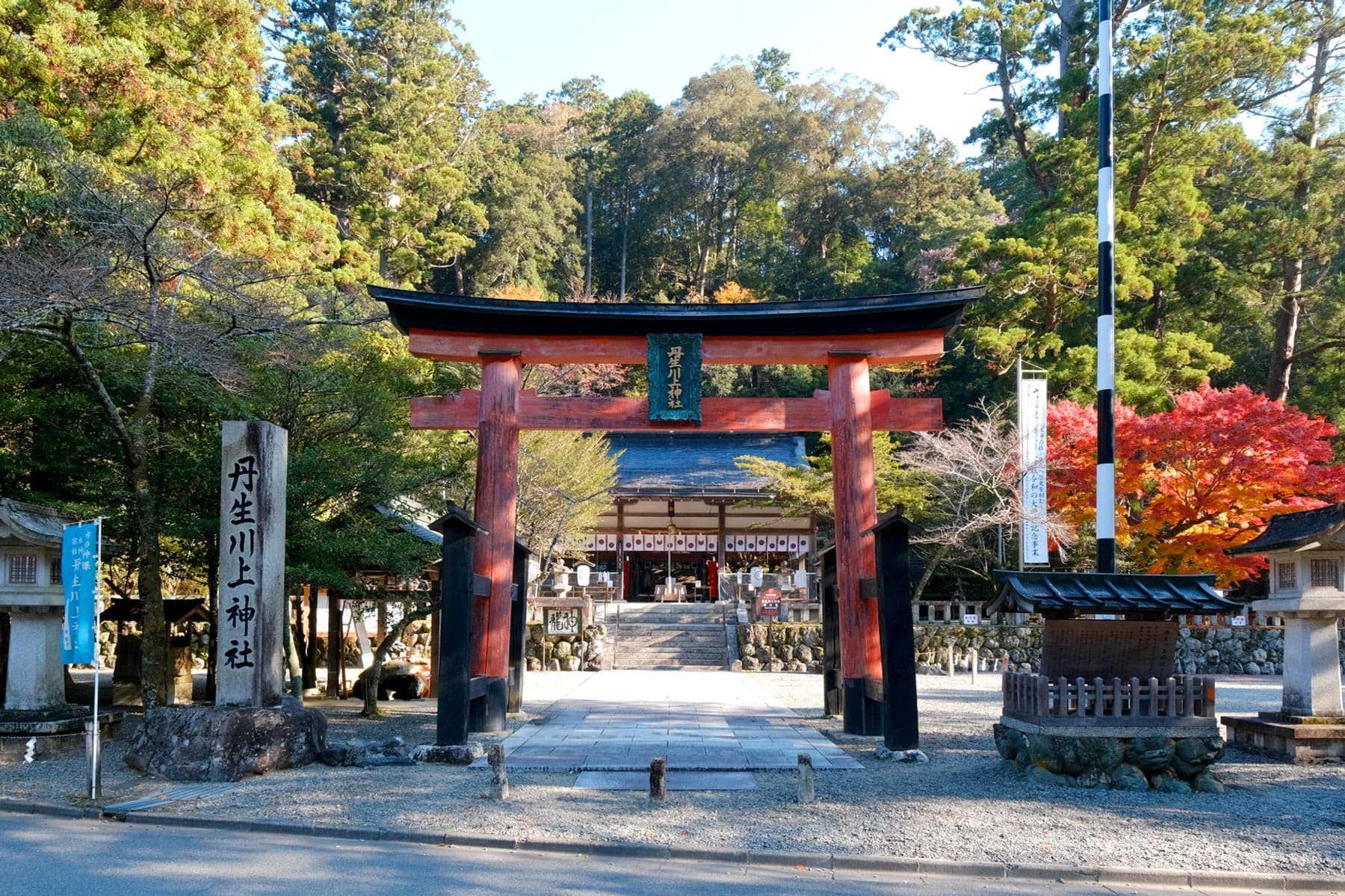
Walking up along the Takamigawa River, the shrine comes into view. As the mountains deepen, the sounds change — until there is only the rustle of leaves and the sound of water. I found myself thinking: the people who came here to ask for rain must have walked this same road.
1. The State, Repeating Itself
In 675 AD, during the reign of Emperor Temmu, the Nihon Shoki — one of Japan's oldest chronicles, compiled in 720 AD — records the following: during a drought, the imperial court dispatched envoys to Niukawakami Shrine, presented sacred horses, and prayed for rain. This appears to be the earliest written record of the shrine.
The records repeat themselves across the following centuries, through the Heian period (794–1185). When rain did not come, the court sent envoys to pray for it; when there was too much, they came to pray for it to stop. Over seven hundred years: 796 times.
It feels less like prayer, I think, and more like placing an order. Approaching a counterpart with a proven record, following the correct procedure, bringing the necessary offerings, and making a formal request. The relationship between the court and this shrine, across seven centuries, had that quality — transactional, earnest, almost contractual.
Seven hundred years. Seven hundred ninety-six times. The court came here to ask for rain.
2. The Water Goddess, and How She Came to Be
The principal deity of the middle shrine is Mizuhanome-no-kami — the goddess of water. According to the Kojiki and Nihon Shoki, Japan's two oldest chronicles, she was born from the suffering of the goddess Izanami as she lay dying from burns she received while giving birth to the god of fire. From the agony of fire, the deity of water emerged — as if the logic of natural balance had been given a face and a name.
Enshrined within the precinct are subsidiary deities whose names contain the character for dragon: Takaokami-no-kami, the dragon deity dwelling on mountaintops; and Kuraokami-no-kami, the dragon deity of valleys and deep pools. The character okami (龗) appears to be an archaic Japanese word for dragon.
The mountains of Yoshino are among the rainiest in Japan, receiving some of the highest annual precipitation in the country. The mountains gather water; the water becomes rivers; the rivers descend to the plains. Placing a water deity at the source of this system has a geographic logic that feels almost self-evident.
3. Black Horses, White Horses — and the Origin of Ema
When praying for rain, the court offered a black horse. When praying for rain to stop, a white horse. Black for the color of storm clouds; white for the color of a clear sky.
Eventually, the supply of actual horses became difficult to sustain — the journey was long, and horses were expensive. At some point, the court began substituting: planks of wood painted with the image of a horse. This substitution is believed to be the origin of ema — the small wooden votive tablets that hang at Shinto shrines across Japan today, each painted with various images, on which worshippers write their prayers and wishes. If you have visited a Japanese shrine and seen those rows of wooden plaques — hopes for exam success, recovery from illness, a safe journey — you have encountered the distant descendant of an imperial solution to a horse shortage.
Niukawakami Shrine now exists as three separate institutions: the lower shrine (Shimsha) in Shimoichi-cho, the middle shrine (Naka-sha) in Higashiyoshino Village, and the upper shrine (Kamisha) in Kawakami Village. This three-shrine arrangement is itself a product of medieval turbulence: after the Onin War (1467–1477) and the century of conflict that followed, the original sacred site was forgotten, and Edo and Meiji-period scholars identified different locations as the "true" Niukawakami Shrine — resulting, eventually, in all three being officially recognized.
Walking back down the path, I listened to the sound of the river. The Takamigawa runs fast. I thought about the court envoys making this same journey across seven hundred years — and how the river must have sounded the same to all of them.