ABOUT
Where five ancient roads once met —
and the tourist crowds never found.
Gojo, south of Nara. A hundred-year-old machiya townhouse, restored and yours alone.
Place
Most travelers pass through this part of Nara without stopping. That’s exactly the point.
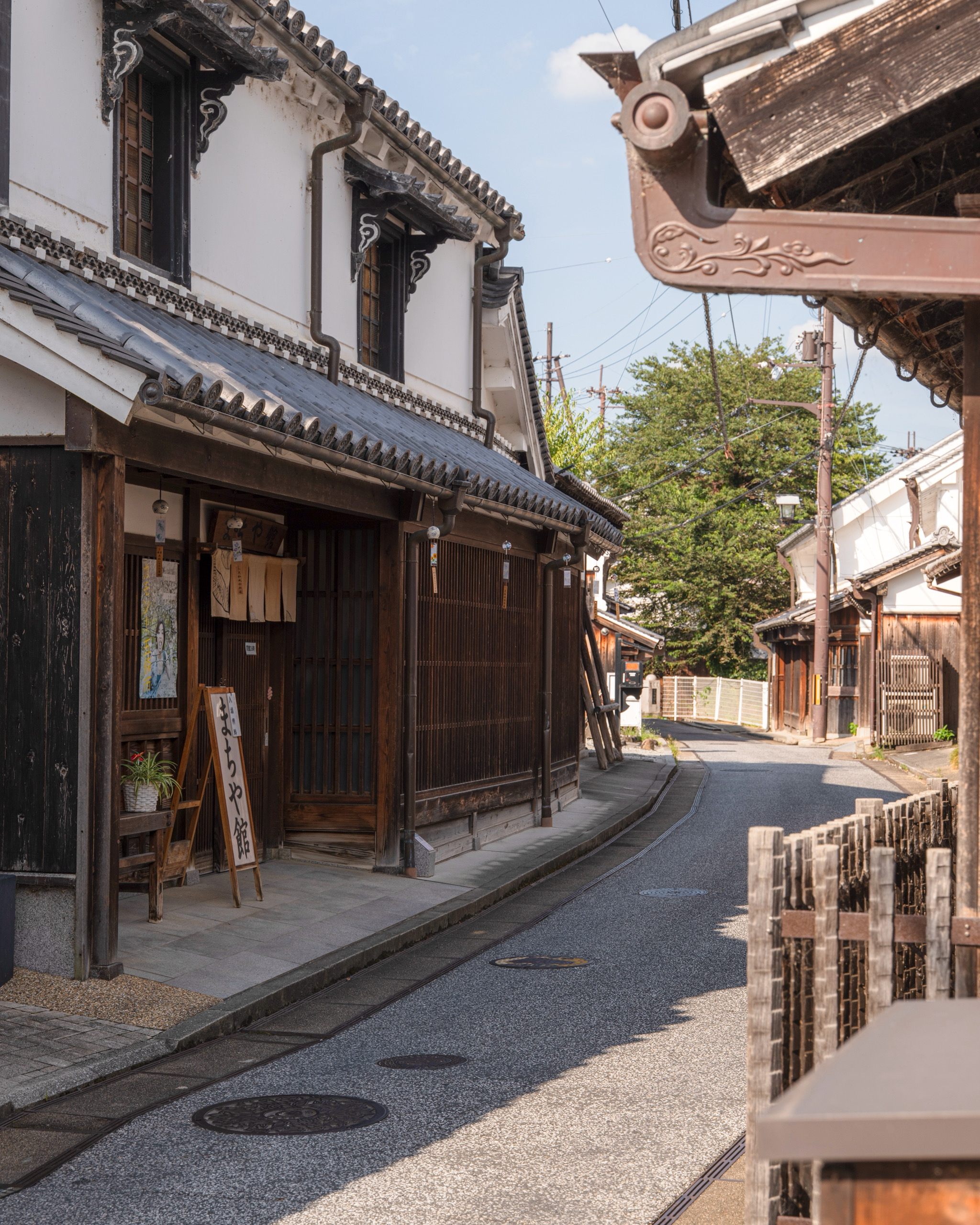
Gojo was once one of Japan’s great crossroads — five ancient highways converging in a single merchant town. Traders, pilgrims, and samurai all passed through here. The old quarter along Shinmachi-dori still looks much as it did in the Edo period: a row of wooden merchant houses with their distinctive udate firebreaks, slightly weathered, entirely unperformed for visitors.
Today, Gojo sits quietly at the center of southern Nara — a natural base for Yoshino, Koyasan, Kumano, and the Omine mountains. Close to everywhere. Known to almost no one.
Building
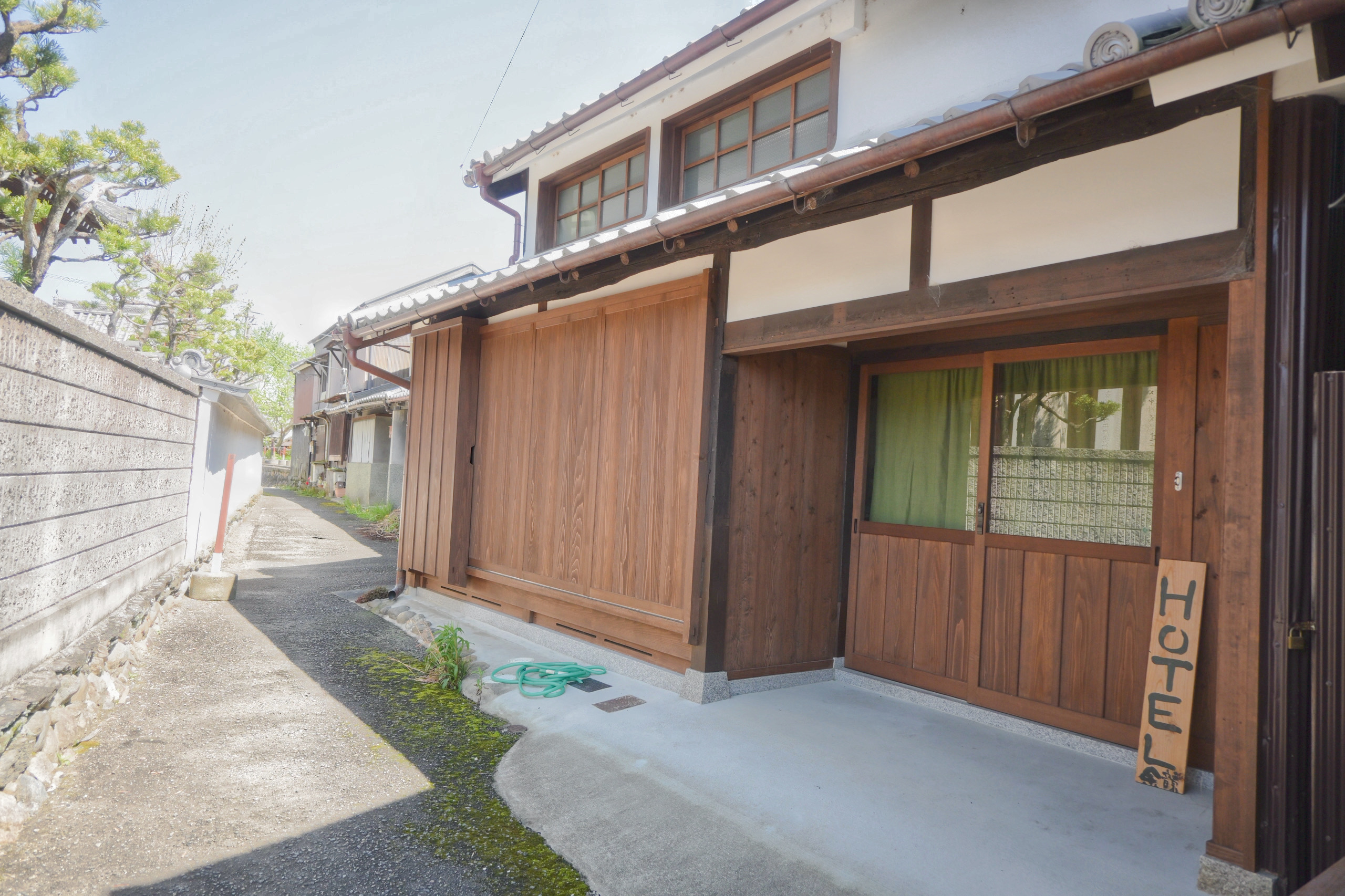
We found the building in Gojo’s old quarter — a machiya townhouse, a hundred years old, built for a merchant family and lived in ever since.
Slide open the wooden door and something shifts. The air is different. The light comes through at a different angle. There’s a stone-paved entryway, old beams overhead, a small courtyard where the day moves slowly.
We fixed what needed fixing and left the rest alone. The things that take a century to accumulate — the grain of the timber, the worn edges of the stone — aren’t things you can recreate. We kept them.
The whole building is yours for the stay.
Concept
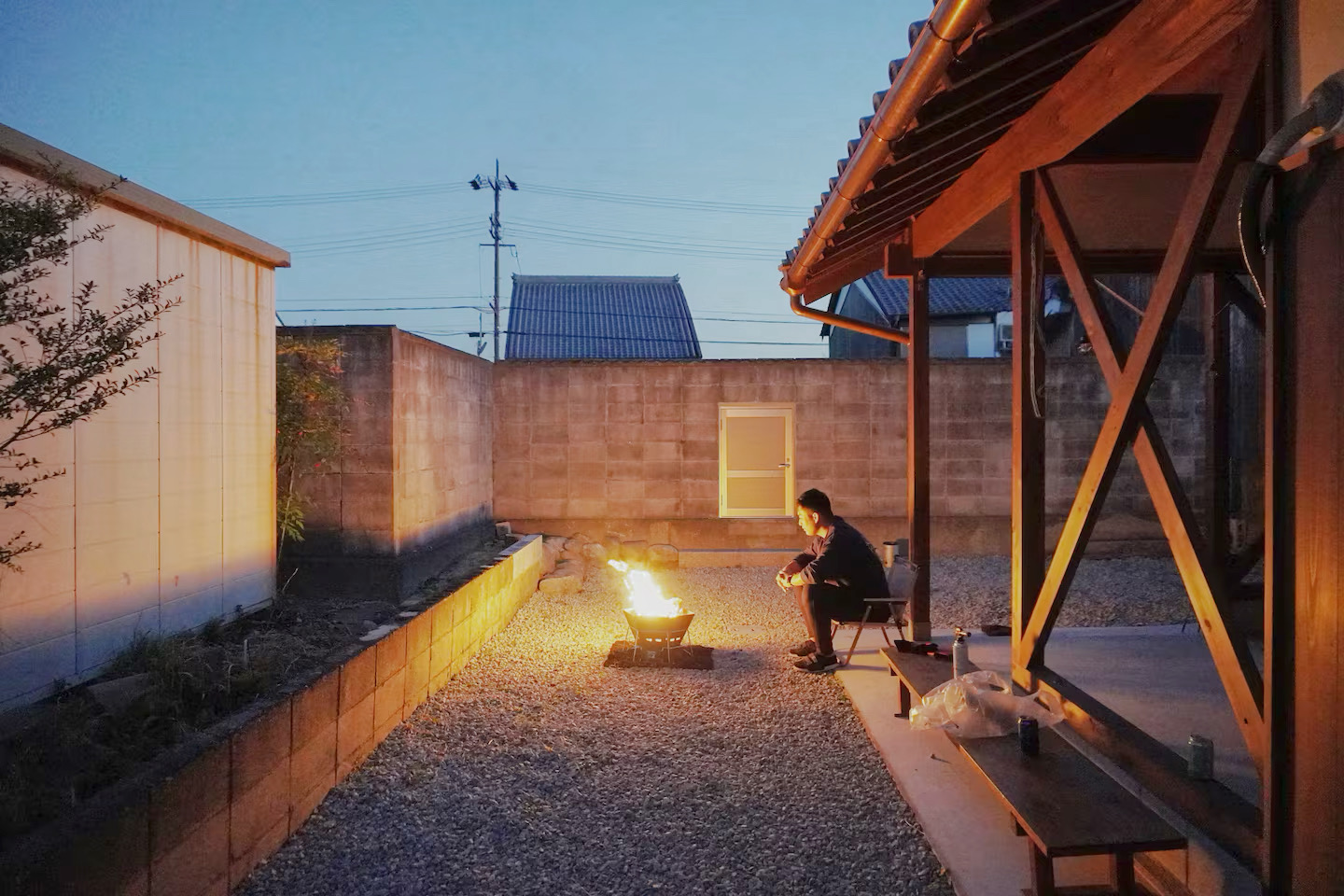
There’s a particular feeling at the end of a good day of travel — when what you’ve seen and heard hasn’t fully settled yet. You turn it over in your mind. A conversation, a view, a moment you didn’t quite expect.
We built this place for that feeling. Not to pack in more sights, but to let the day slowly land.
yoinn — the word we chose for this inn — means the lingering resonance after a sound fades. The part of the experience that stays with you on the way home, and sometimes longer.